The Theology of Metrics: Your Garmin, Your Disciplines, and Psalm 139
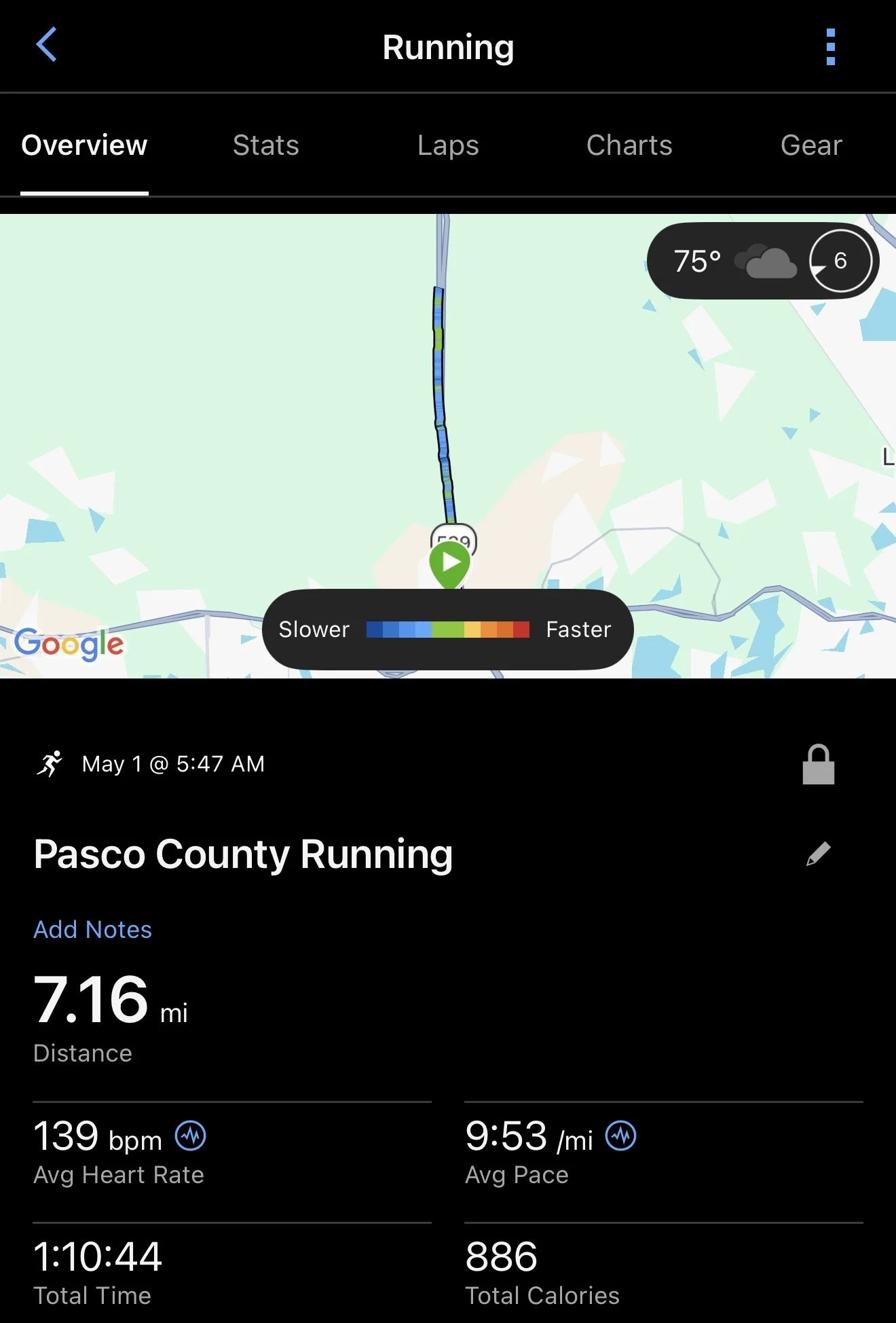
My Garmin told me I was dying.
Not literally. But when I woke up one morning and saw my HRV had tanked for the third day in a row, I panicked. I spent the next 20 minutes cross-referencing my sleep score, my training load, my Body Battery, and my stress levels. I rescheduled a workout. I went to bed earlier. I drank more water.
I responded to that data with genuine urgency.
And then I closed the app, skipped my Bible reading, rushed through a 90-second prayer, and called it a morning.
My Garmin had my full attention. God got the scraps.
Here's the thing: I'm not anti-data.
I love my Garmin. Tracking works. The metrics really do matter. But somewhere along the way, I started treating my fitness data like it was sacred and my spiritual disciplines like they were optional. And that's incredibly backwards, and it’s unintentional on my part.
David wrote something that should stop every athlete in their tracks:
"You know when I sit and when I rise; you perceive my thoughts from afar. You discern my going out and my lying down; you are familiar with all my ways." (Psalm 139:2-3 NIV)
Read that again. God knows your resting heart rate. He knows your sleep quality. He knows your stress levels before your watch does.
He's been tracking you since before you were born. Before GPS. Before wearables. Before Garmin existed.
And unlike your watch, He's not just collecting data. He's intimately present in all of it.
We track what we worship.
Think about what your Garmin data actually reveals. You check it first thing in the morning. You make decisions based on it. You feel good when the numbers are up and anxious when they're down. You've structured your entire training life around it.
That's not just habit. That's devotion.
And there's nothing wrong with taking your training seriously. But when the watch gets more intentional attention than God does, you've got a formation problem.
The disciplines you skip are the ones you trust least.
Here's what I've noticed: I never skip checking my Garmin. Even on rest days. Even on vacation. I trust that the data will help me. I believe it matters.
Spiritual disciplines? I skip those constantly. And the reason is usually the same: I'm not sure they're actually doing anything.
But that's not a discipline problem. That's a faith problem.
Paul told Timothy to "train yourself to be godly" using the same word the Greeks used for physical training. (1 Timothy 4:7) He knew the parallel. Physical training and spiritual formation work the same way: small, consistent inputs compound over time into something you can't fake and can't rush.
Your Garmin knows this. You've seen it work in your body. The question is whether you trust it to work in your soul.
God is tracking things your watch never will.
Your HRV tells you how recovered your nervous system is. Your VO2 max tells you how efficient your aerobic system is. Your training load tells you if you're overdoing it.
None of it tells you if you're becoming more patient. More humble. More grateful. More present with the people in your life.
God is tracking all of that. And He's not annoyed by the slow progress. He's not recalibrating His baseline on a bad week. He's not sending you a notification that says "high stress detected."
He's with you in it. Familiar with all your ways. Already there.
This week, I want you to do one thing: open your Garmin app or your Apple Health or Google Fit app, and look at how many days in a row you've logged a workout or checked your metrics.
Now ask yourself: when's the last time you showed up to a spiritual discipline with that same consistency?
Not perfectly. Not for an impressive streak. Just consistently.
Pick one practice. Prayer. Scripture. A few minutes of stillness. And give it the same non-negotiable status you give your morning HRV check.
Your body is worth tracking. Your soul is worth more.
God has been paying attention to you longer than Garmin has. He knows your going out and your lying down. He's familiar with all your ways.
The question isn't whether you're being tracked. The question is whether you're paying attention to the One doing the tracking.
Train hard. Check the data. And then spend at least as much time with God as you do with your watch.
Formation over metrics. Always.
I put together a free guide called Train the Whole Person for exactly this. It's for those who are serious about their faith and their physical discipline and want a framework for how those two things actually work together.
If this post connected with you, that guide is the next step.
Download it free: andymage.com