Selah: The Spiritual Discipline Hiding in Your Cooldown
In any month except January in Florida, I finish my run, hit stop on my watch, and walk straight to the garage fan sitting on the floor.
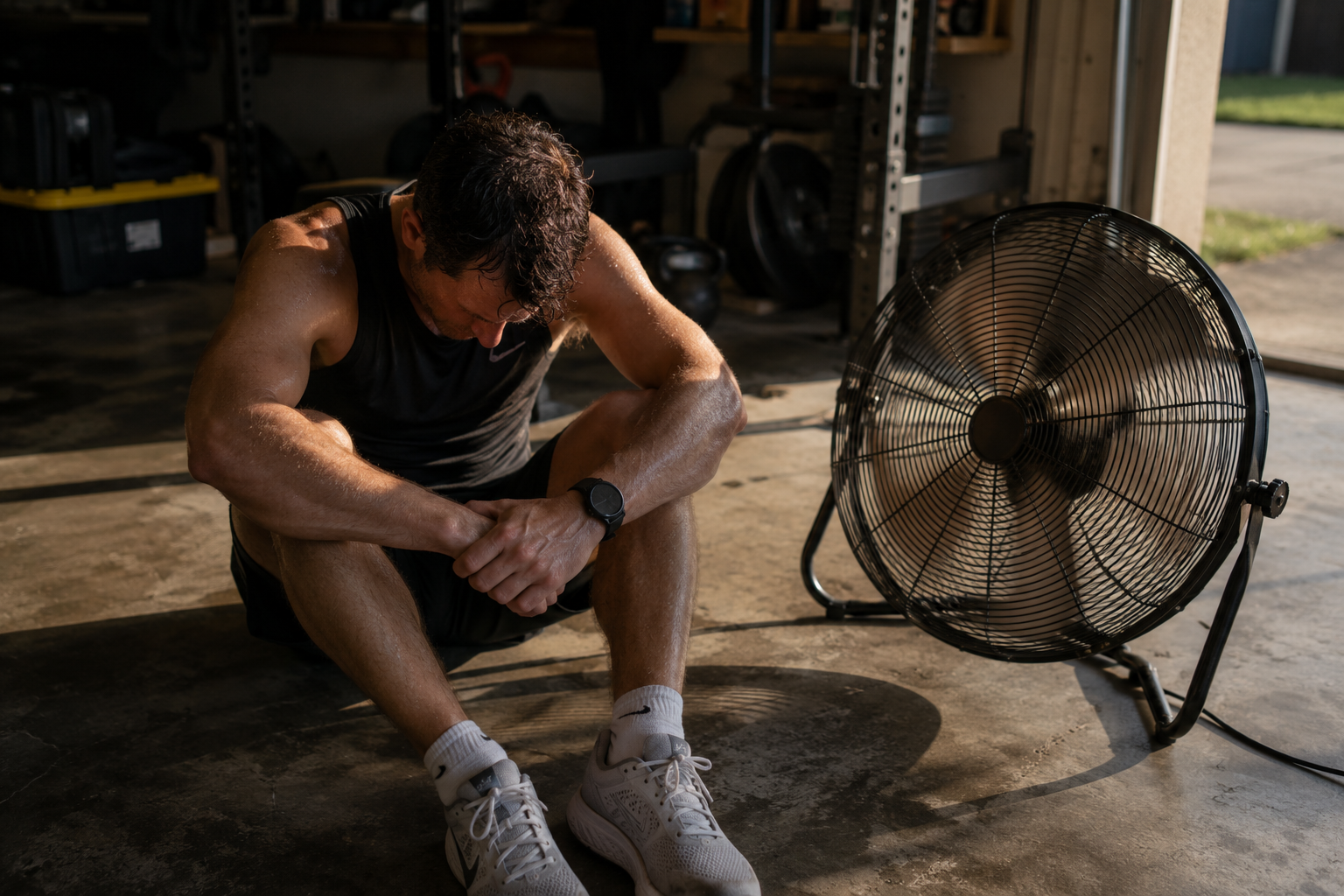
This is where my elaborate ritual starts. Set a timer for three minutes. Sit down on the floor facing the fan. Start box breathing. Four counts in, hold for four, four counts out, hold for four. For three minutes.
Most people think the run is the work, and they’re not wrong. But the three minutes after? That's where your body actually starts recovering. It’s where your heart rate drops and your nervous system shifts. The adaptation begins not during the effort, but in the rest that follows.
I started doing this because of a sports science rabbit hole, but I stayed because of what started happening in those three minutes. Somewhere between the second and third breath, the noise of the day hadn't found me yet. I was just a man in a garage, breathing, and praying.
Turns out, that's not just good physiology. It's a spiritual discipline.
We are trained to push through. To add the extra rep. Answer the next notification. Fill the silence. But some of the most important work God does happens when we finally stop. The ancient poets knew this. They had a word for it.
Raphah. Selah.
"Be still, and know that I am God." (Psalm 46:10 NIV)
The Hebrew word for "still" is raphah -- to sink down, to let drop, to release. It’s not passive indifference. It’s active surrender.
The command comes in the middle of a psalm about nations collapsing and mountains falling into the sea. The chaos is real, but God's response is: “Stop. Let your hands drop. Know who I am.”
——
The ancient Hebrew worship songs used a word we still see in our Bibles but rarely understand: Selah.
No one knows exactly what it means. The best guess? A pause. A breath. A moment for the music to stop so the words could land.
Selah appears 71 times in the Psalms. The writers did not just want you to read their words. They wanted you to stop inside them.
Your body understands this better than your schedule does. When you finish a hard effort and immediately sprint into the next thing, your cortisol stays elevated, your heart rate stays high, and the adaptation you worked for never fully arrives. Rest is not recovery from training. Rest is part of training.
The same is true spiritually. Prayer without stillness becomes a to-do list presented to God. Worship without pause becomes performance. Bible reading without selah becomes information without transformation.
The three minutes I spend breathing in front of a fan are not wasted. They are where the run becomes something. And the moments you carve out to be still before God are not stolen from your productivity. They are where faith actually deepens.
——
This week, build a selah into at least one part of your day.
After your run or workout, set a three-minute timer before you check your phone. Breathe. Pray one sentence. Let your body and soul both come down.
If you don't train, find a different threshold. After you sit down for lunch, after you close your laptop, after the kids go to bed. Pause before you reach for the next thing. Say out loud or in your heart: "Be still. Know that He is God."
Three minutes is enough. You do not need a retreat. You just need a garage and a fan.
——
God does not need your productivity. He wants your presence.
The invitation in Psalm 46 is not to a monastery. It’s to a moment. Right where you are, in whatever garage or kitchen or parking lot you find yourself in, you can raphah. You can take a selah. Let it drop. Breathe. Know.
He was God before your run. He will be God after your meeting. The stillness is not where you find Him for the first time. It is where you finally notice He was already there.